Our Ecologists Surprised Us with 110 New Flora Friends
Can I learn them all before the prairie is planted?

When you’re a plant on a prairie, more friends are almost always better.
When building a seed list for a brand-new native tallgrass prairie, experts recommend cramming in as much biodiversity as possible through a wide mix of native grasses and forbs (wildflowers). That diversity helps the prairie stay strong when rough times hit. Droughts, floods, deer browsing, heat waves, cold springs, and invasive species may hurt some plants, but others will thrive and help the ecosystem bounce back. And every species brings something different to the table: nectar for pollinators at different times of year, deep roots that hold soil in place, food for specialist insects like monarchs, nesting structure for birds, or nutrients that help neighboring plants grow. Over time, all those relationships start turning a simple field into an interconnected web of abundance.
Our Big News
When we originally sat down with our ecologists, Adaptive Restoration, to discuss our wishlist for seeds for Badgerton Prairie, we thought we were rather ambitious when we requested a list with 50-60 different species. But we got some amazing news last week when they told us they were combining several clients’ orders to get bulk discounts for all of us which allowed them to significantly increase the diversity of the mix without increasing the cost.
The final seed mix will have ONE HUNDRED AND TEN different species—every one of them native to the rolling, Driftless hills of southwest Wisconsin!
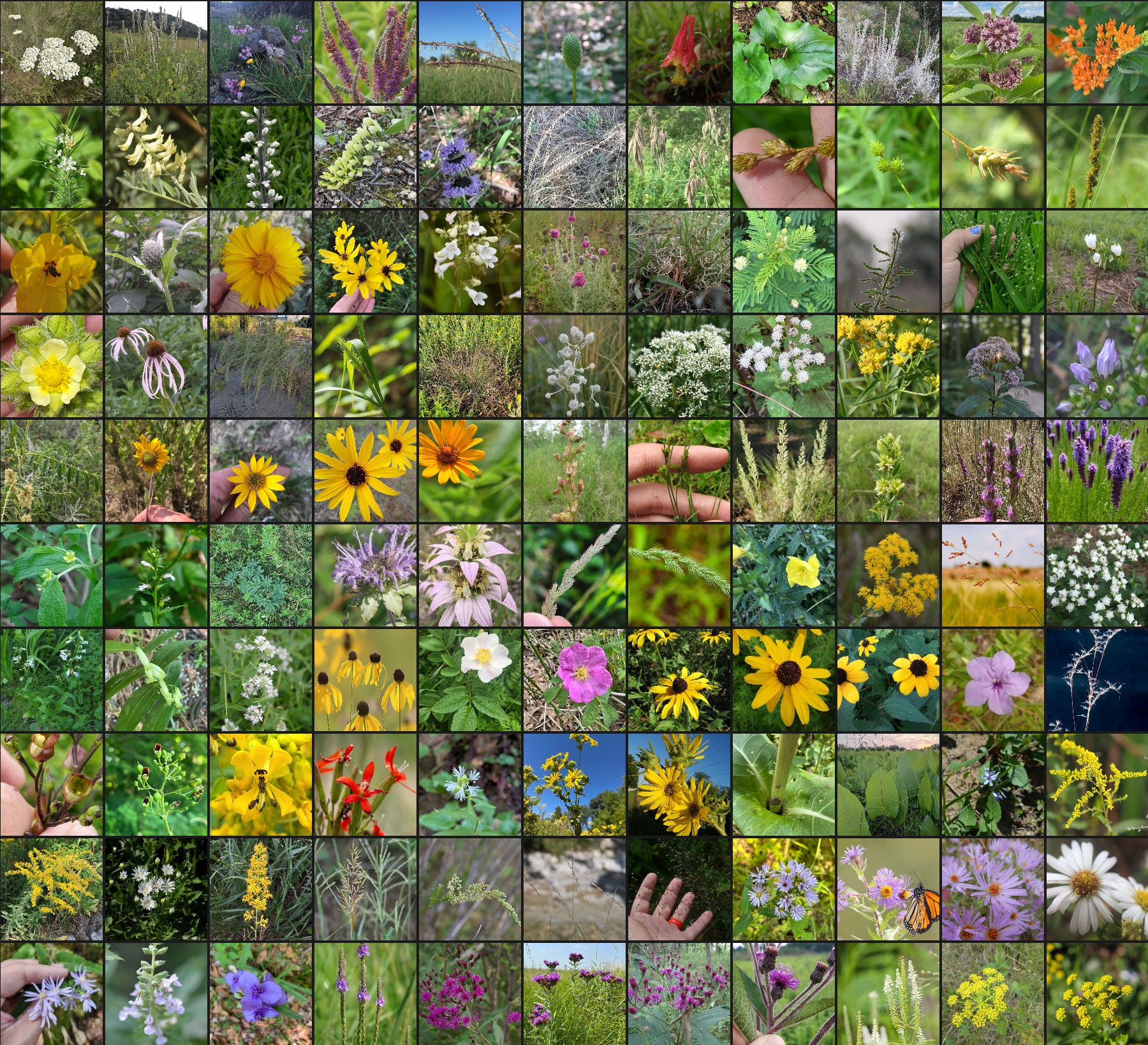
About 20% of the species are grasses and sedges, including some tallgrass prairie classics like Big and Little Bluestems, Indian Grass and Switchgrass. The rest will be a beautiful mix of prairie flowers that should keep our field full of blooms nearly year-round!
This is going to give our prairie such a robust, resilient foundation. I’m over the moon about how this has worked out!
Learning Their Names
It’s always been my plan to get serious about building my native plant ID skills once we had this seed list. But to learn over a hundred new plants is going to take some serious studying!
I’ve spent the last few days building out a Field and Study Guide.
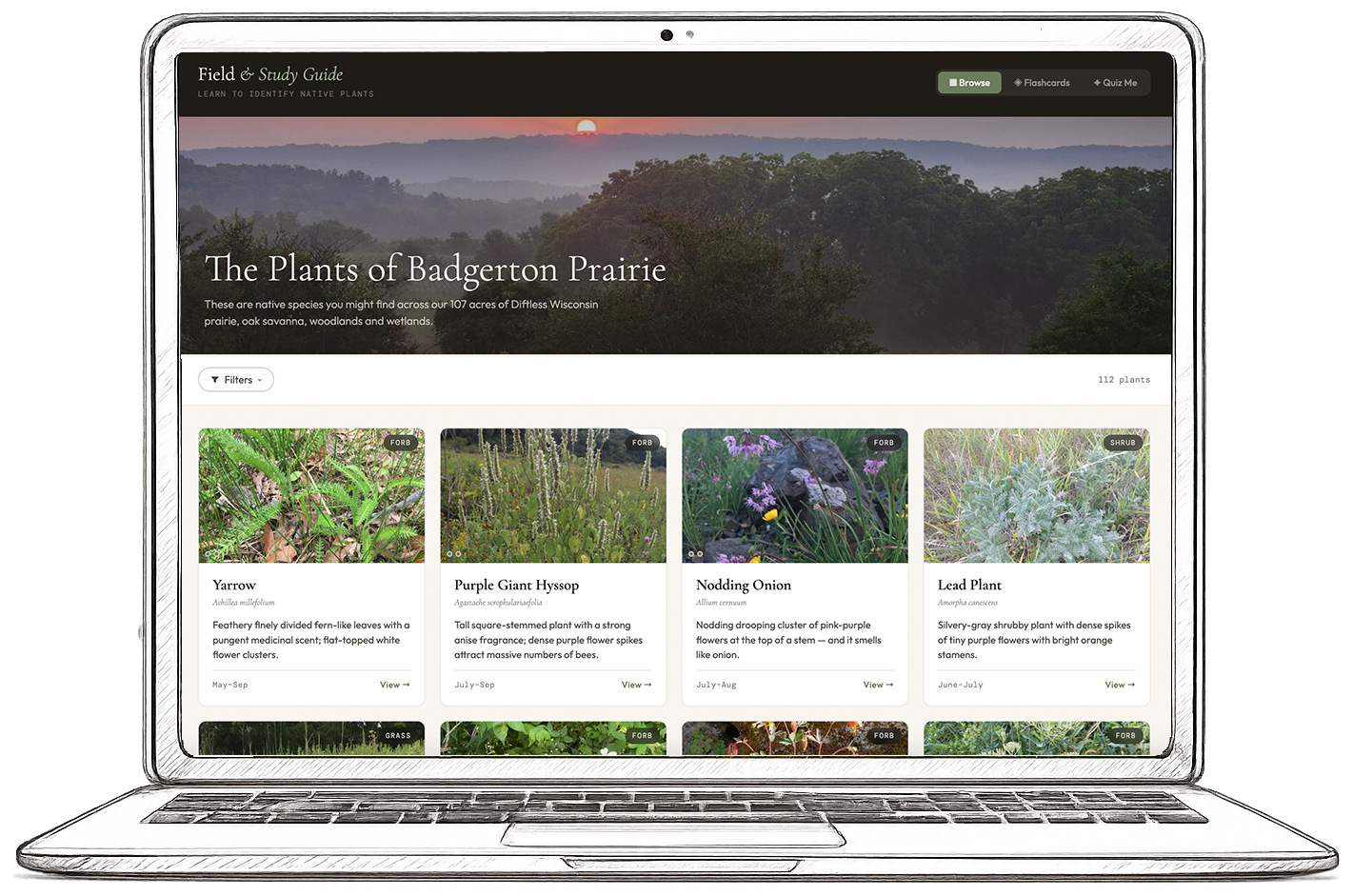
Using open-source images from iNaturalist, and plant details pulled together and coded with the help of Claude, I created a fact sheet for every plant on the seed list.
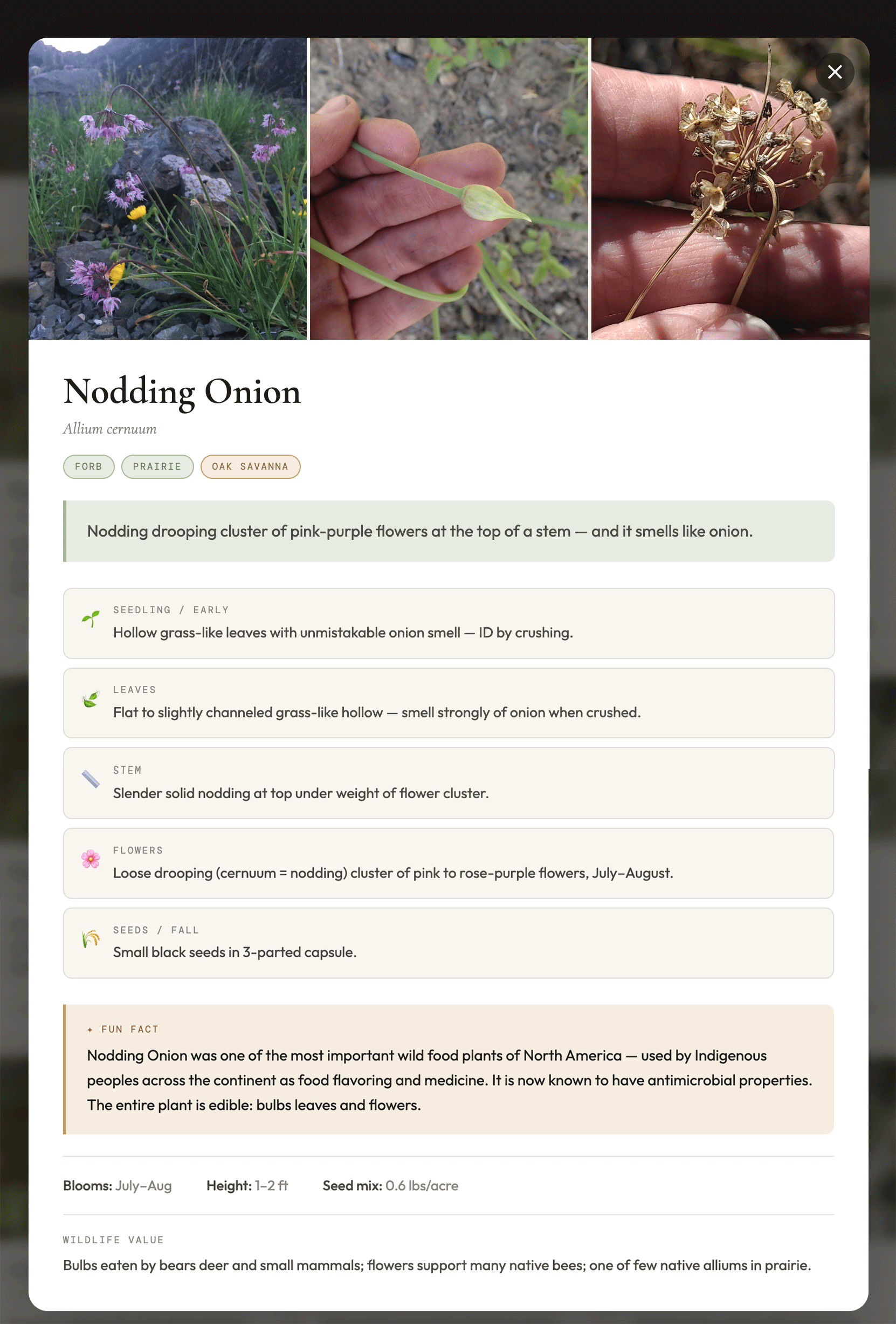
I love the Fun Facts and Wildlife Value sections the most. Having the context of how they fit in the ecosystem and other interesting tidbits helps me keep the plants distinct from each other in my mind.
As helpful as the fact sheets are, I knew I’d need something more interactive to really study and commit this many plants to memory. So I also created digital flashcards and quizzes to test my knowledge
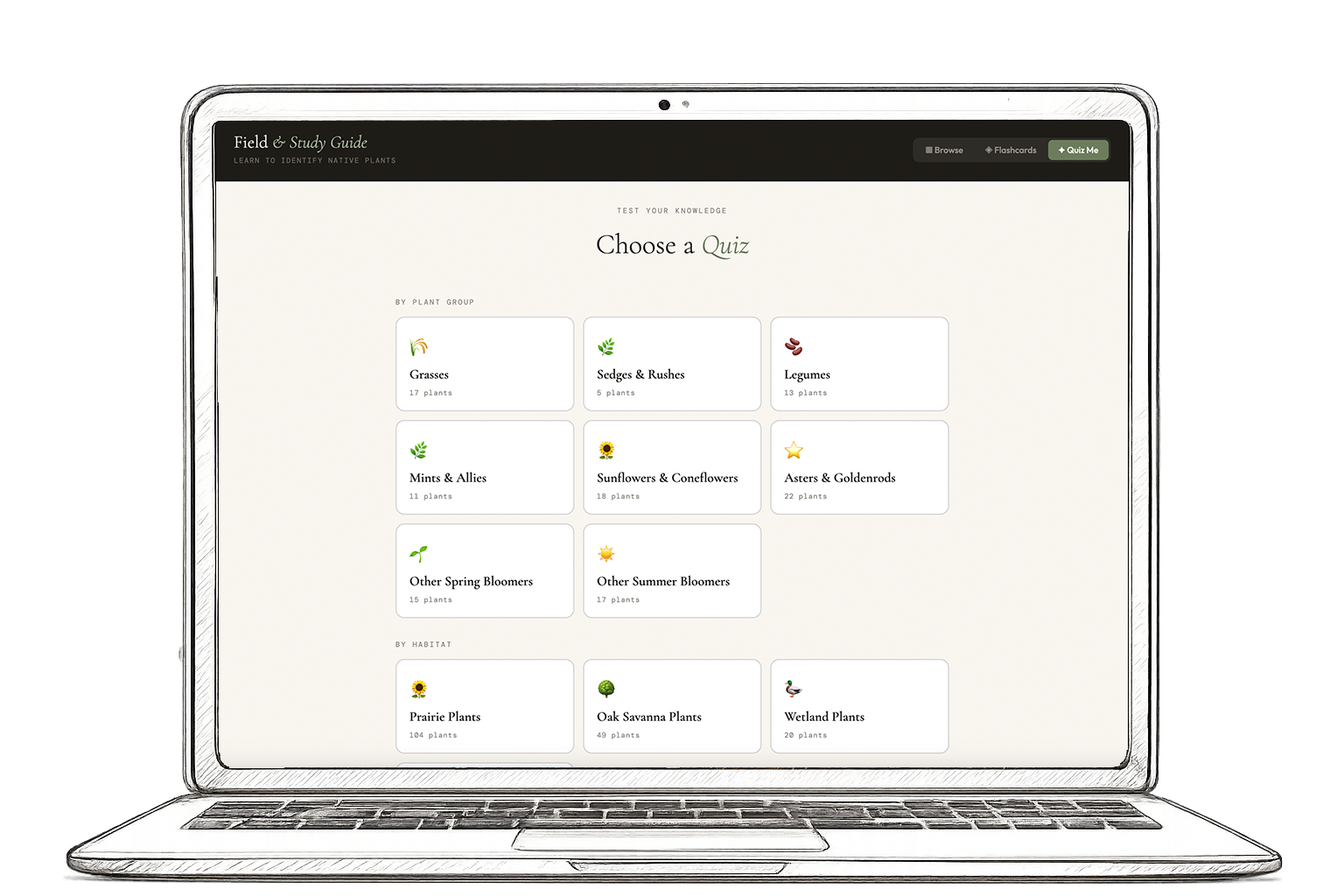
In the quiz section, the plant names stay hidden until you tap the card to reveal them. Any plants I miss get repeated again at the end so I can spend extra time on the ones giving me trouble.
I’ve ensured the website works for both desktop and mobile so I can study while I’m on the go.
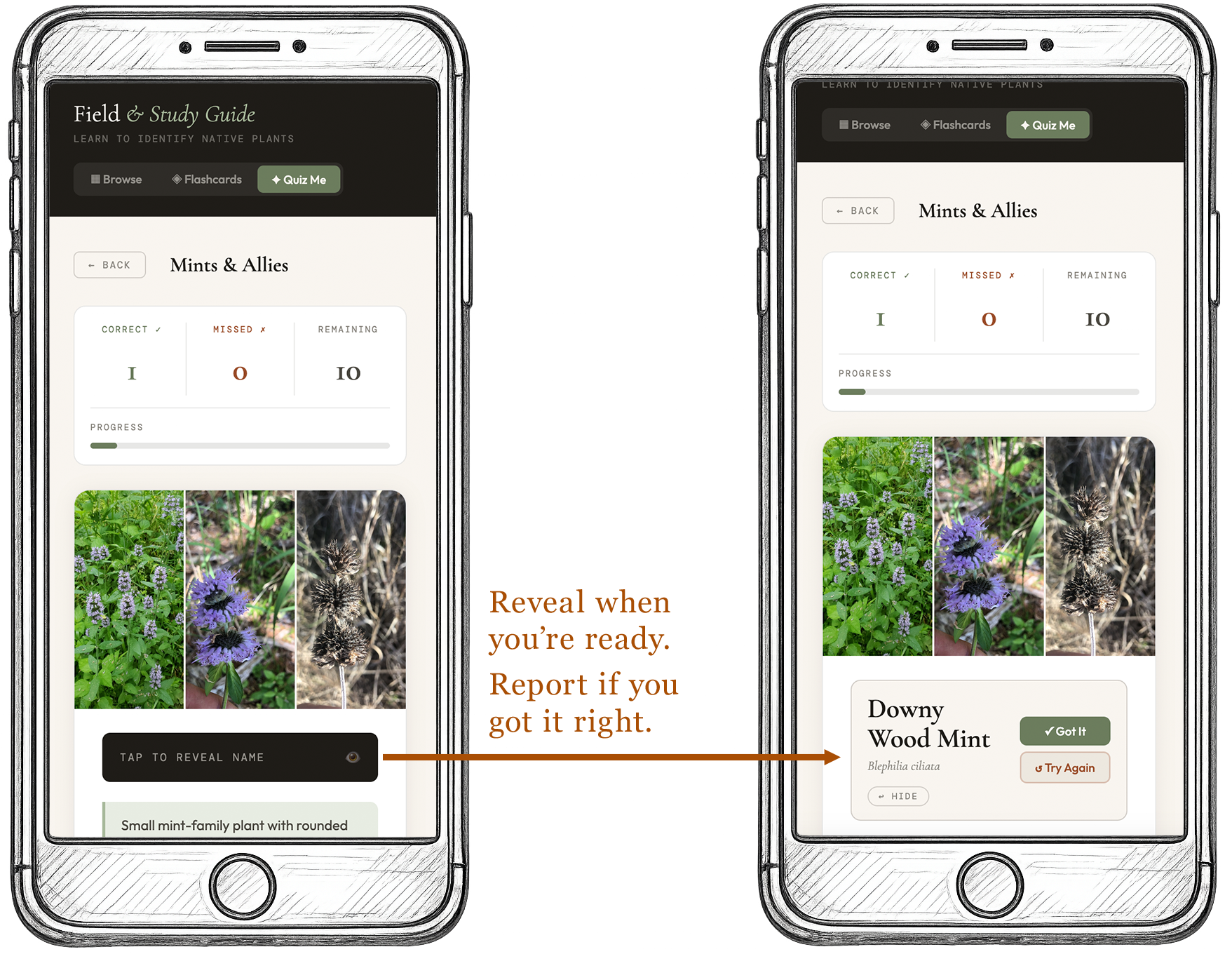
The plants on this website are specific to Badgerton, but the list includes many midwest prairie classics. For anyone who is looking to increase their Native Plant ID skills, this should be a handy tool for studying up!
In the near future, I plan to add:
Common local invasive species: important to learn so we can spot them early and manage them out!
Woodland species: I spotted about a dozen on our Mother’s Day hike that will be good to get added soon.
“Planted” vs. “Remnant” tags: to differentiate plants we’ve introduced versus what’s always been here.
Do you steward a restoration site or have a list of plants you are trying to learn?
I built this website so it could easily be updated via an excel sheet for ANY list of plants. If you wanted to make a website just like this for your own plant list, I could easily provide the files and instructions for you to DIY a site of your own if you’re interested.
If even one person comments that they are interested, I can have a follow up post in a couple of weeks or so with those details and downloads available for free.
This phase of the project reminds me so much of when I was pregnant and reading baby books, trying to learn all I could to be a good mom. I’m sure, just like raising a child, raising a prairie will be full of shocks and surprises, no matter how much I prepare. But, as my own little bird gets ready to leave my nest in a few years and I look to a new phase of caretaking in my life, I can’t help but throw myself into the planning and preparation once more.
Thank you to all of you who are helping and following along on this journey as we grow from sacks of seeds to a vibrant ecosystem. It took a village to raise my only child, I can’t imagine what it will take to raise these 110 plant babies!
I would be interested in building my own site! I also used Claude to build flashcards to help me learn the native Prarie plants of Oregon